
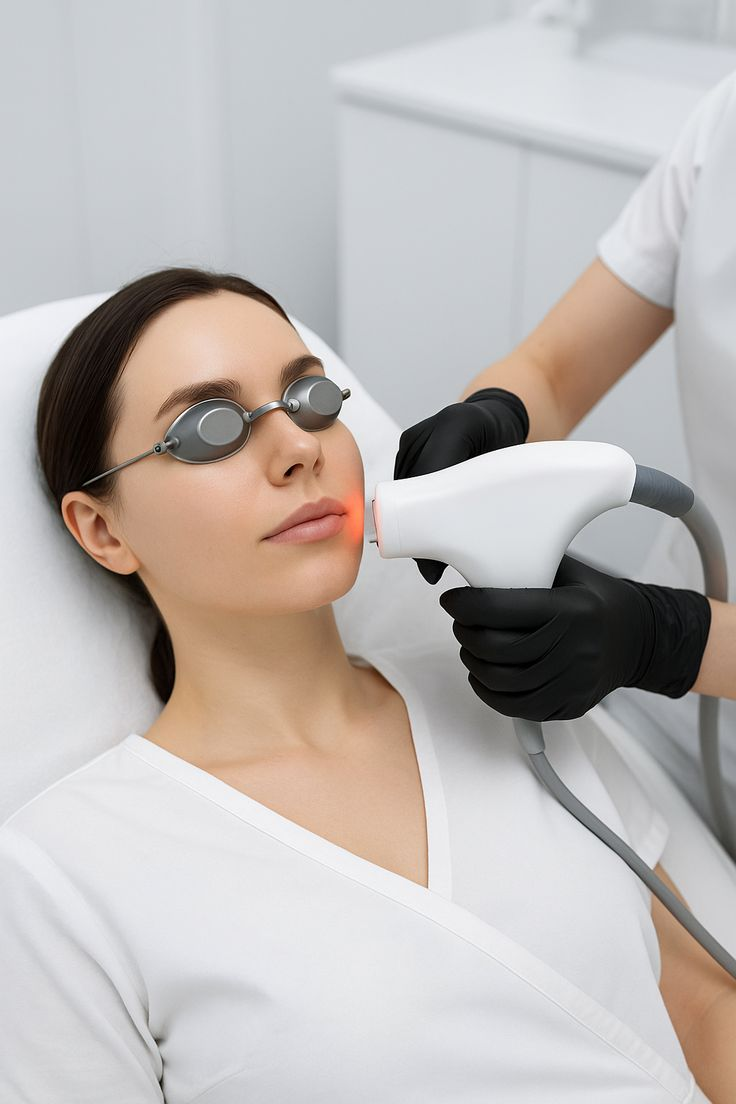
Laser hair removal is one of the most requested treatments at our clinic. If you are considering laser hair removal, it helps to know what the process looks like from your first consultation to your last session.
How does laser hair removal work?
The laser sends a beam of light that is absorbed by the pigment (melanin) in the hair. The energy heats the hair follicle and reduces its ability to grow new hair. Because hair grows in cycles, only the hairs in the active growth phase respond at one time. This is why a single session is never enough.
How many sessions will I need?
Most people need several sessions, spaced a few weeks apart. The exact number depends on the area being treated, hair thickness, skin tone and hormonal factors. Our doctor will assess you and explain a realistic plan during your consultation. Laser gives a long-term reduction in hair growth; some people may need an occasional maintenance session.
How to prepare
- Shave the area a day before your session. Avoid waxing, threading or plucking for a few weeks before, because the laser needs the hair root to be present.
- Avoid direct sun exposure and tanning on the area to be treated.
- Tell the doctor about any medicines, skin conditions, pregnancy or recent procedures.
- Come with clean skin, without creams, perfume or deodorant on the area.
What does the session feel like?
Most people describe a quick, warm snap on the skin. A cooling system and a protective gel help keep you comfortable. Small areas such as the upper lip take only a few minutes, while larger areas like the legs take longer.
Aftercare
- Mild redness or slight swelling around the follicles is common and usually settles within a day.
- Use a gentle moisturiser and avoid hot showers, saunas and scrubs for a couple of days.
- Apply sunscreen and avoid strong sun on the treated area between sessions.
- Do not wax or pluck between sessions; shaving is fine.
Who should avoid laser?
Laser may not be suitable during pregnancy, over active skin infections or on freshly tanned skin, and some medicines can make skin more sensitive. This is why a consultation always comes first.